How can I tell if my Wassily chair is authentic?
First is to look at the video under the Resources tab that shows the clues you’re looking for to help determine authenticity.
In the early days, starting in the late 1950’s two different American companies imported authentic Wassily chairs from Italy, Knoll and Stendig. They both purchased from the same factory, Gavina. When Knoll took over the factory in the late 1960s they continued to honor the Stendig contract. So if your chair has a Stendig logo, it is considered equally as authentic as Knoll. Stendig is no longer in business having shut down in 1988.
Here are some obvious clues:
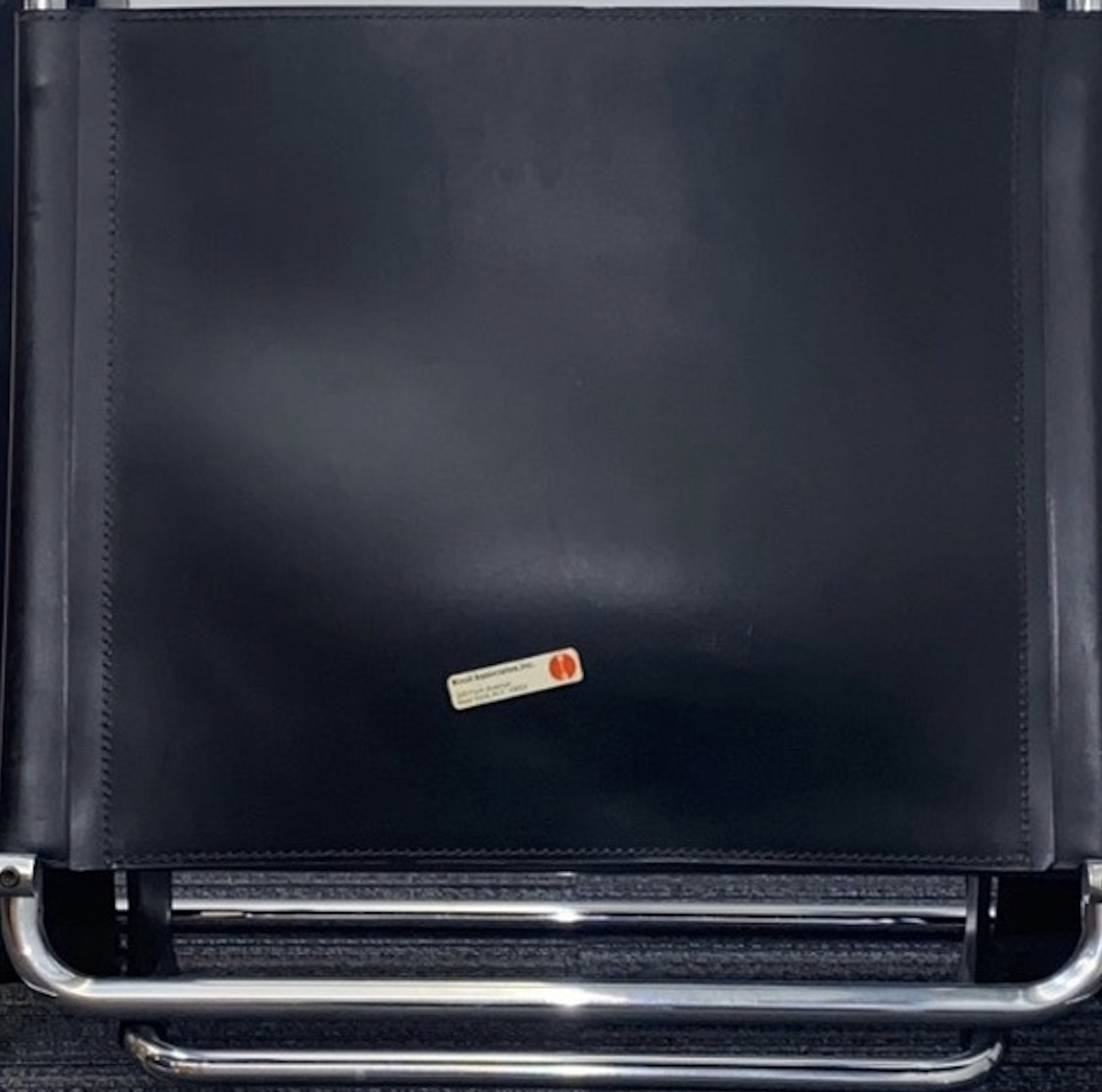
1. Beginning about the year 2000 Knoll began stamping their frames with an embossed Knoll logo. If your frame predates this, then look for a paper sticker on the underside of the seat. I have seen the logo sometimes placed on the underside of the arm so look in both places. It was simply glued to the leather and over time the adhesive gives way with the sticker falling off. If you don’t see the paper sticker, look to see if you can find a reference of where the sticker may have been like a slight color variation in the form of a rectangle.
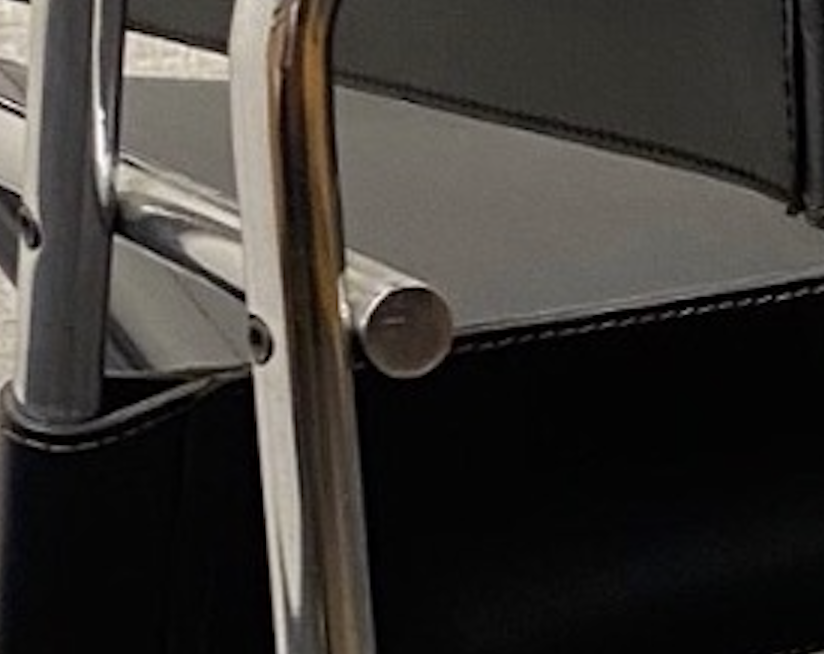
2. The ends of the frame tubes should appear as one continuous piece of steel. The tube ends are finely finished with an undetectable weld. If there is a obvious cap on the tube ends, it’s not the real deal.
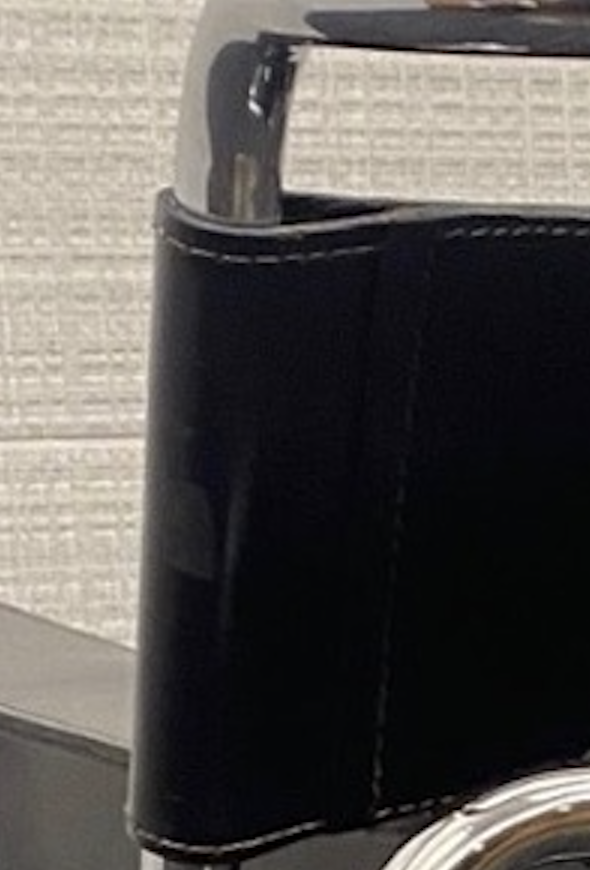
3. The stitching pattern of an authentic Wassily strap has two decorative stitch lines around the loop of each strap. Knock-offs don’t go through the added expense of creating that stitch line.
4. Check the bottom panel of the seat. Is it leather or vinyl or some sort of fiberboard? If it’s not real leather then it’s clearly a knock-off.
Additional considerations:
The straps should be real vegetable tanned leather which would feel stiff (virtually no flex) and very smooth (not distortions like waviness across the leather's surface). They may sag a bit. That’s a normal part of their aging process. Each leather panel should be about 1/8 inch (roughly 3mm) thick. Two panels are sewn together making a strap. The total thickness dimension for a strap should be just a hair under 1/4 inch or 6 mm.
The straps are made from two pieces of leather sewn together with the bottom piece shorter and the upper piece longer. The upper piece wraps around the tubular frame. Often, but not always, there is a thin sheet of fiberboard inserted between the upper and lower panels. This won’t be obvious unless you separate the upper and lower leather panels.
The end of the upper leather panel is skived. This means it's tapered to a degree so it neatly fits in between where the two leather components (upper and lower panels) are joined (stitched).
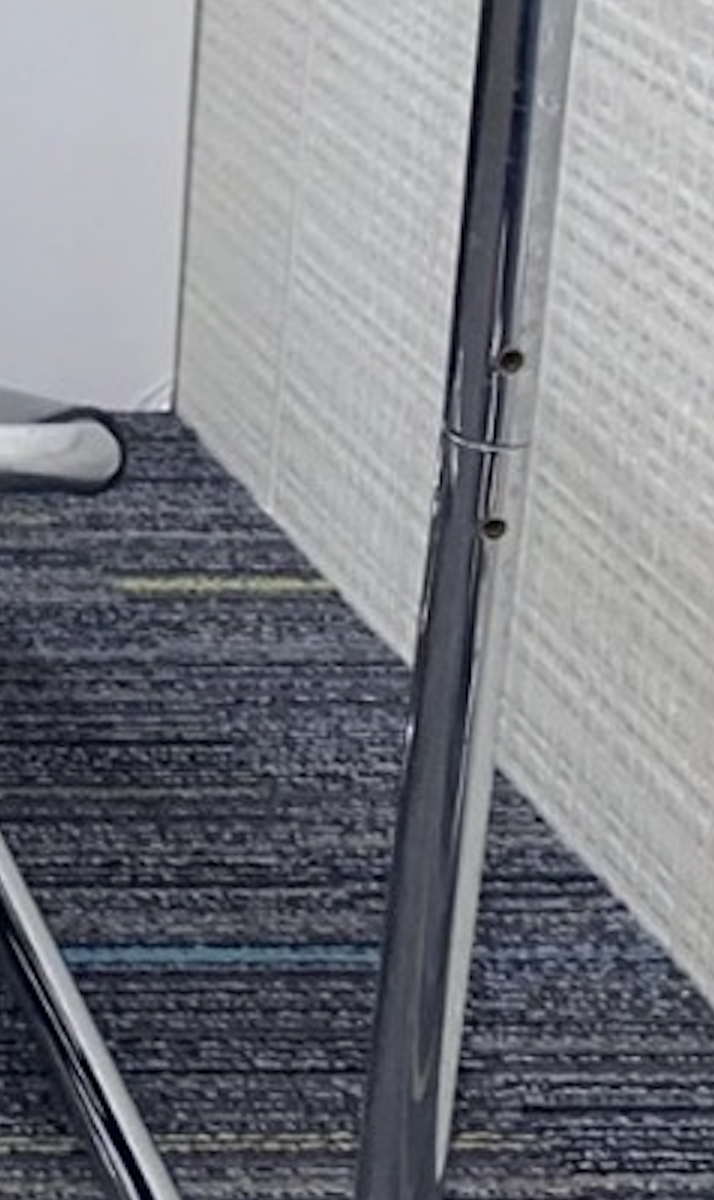
Two holes for set screws, one on either side of the seam on the bottom rails. The set screws turn in past the profile of the metal tube allowing the frame to be separated, front from back. They cannot come out. You will break them if you try hard enough to get them out.
Fasteners are 5 mm Allen head bolts except on the bottom rail where the set screws are 3 mm Allen head.
An original Sales Receipt clearly adds to the evidence of the chair’s authenticity.
Note: Recently Knoll has modified the frame, replacing the finely welded tube ends with a cap, reducing manufacturing costs. In my opinion this modification cheapens the frame. This modification makes the original frames with the fine weld increasingly valuable as they don’t make them this way anymore.
If you are considering selling your chair, you might find a buyer through our newly instituted Wassily Exchange we’re providing, as a no cost option, the opportunity to list your chair. Click here Wassily Exchange to learn more.
Finally, take detailed photos, email them to me and I will offer an opinion. Send to Kevin@AdvLeather.com.